





400 failures, one working hinge: A peek into the R&D behind premium Asus laptop design
Crafting beyond the silicon.
On the sidelines of Computex 2026, a talented team of designers at the ASUS Design Center spoke to us about the research and choices that go into crafting their modern Zenbook, ROG, and Vivobook lineups. Asus designers emphasized how a multidisciplinary, human-centric design approach has not only won global accolades but has also evolved to make the laptop an extension of the user.Vaidyanathan Subramaniam Published 🇩🇪
 Computex Laptop Convertible / 2-in-1 Gaming
Asus has released some impressive laptops over the past few years, particularly with a renewed focus on materials and design.
The ROG Flow X13 offers 110 W of combined CPU/GPU power in an extremely slim 18.7 mm convertible chassis, while the new ROG Zephyrus 14 pairs a Core Ultra 9 386H with an RTX 5070 Ti Laptop and delivers nearly 140 W in an even slimmer 16.3 mm build.
Then there is the ROG Zephyrus Duo GX651, which stands out with its dual-display multitasking prowess while packing up to an RTX 5090 Laptop. Meanwhile, the new Snapdragon X2 Elite Extreme-powered Zenbook A16 and the Snapdragon X1-based Vivobook S16 stand out as productivity powerhouses with excellent battery life.
These devices cater to specific use cases and mobility requirements, but they share one thing in common: attention to design and materials that goes a long way toward completing the notebook experience.
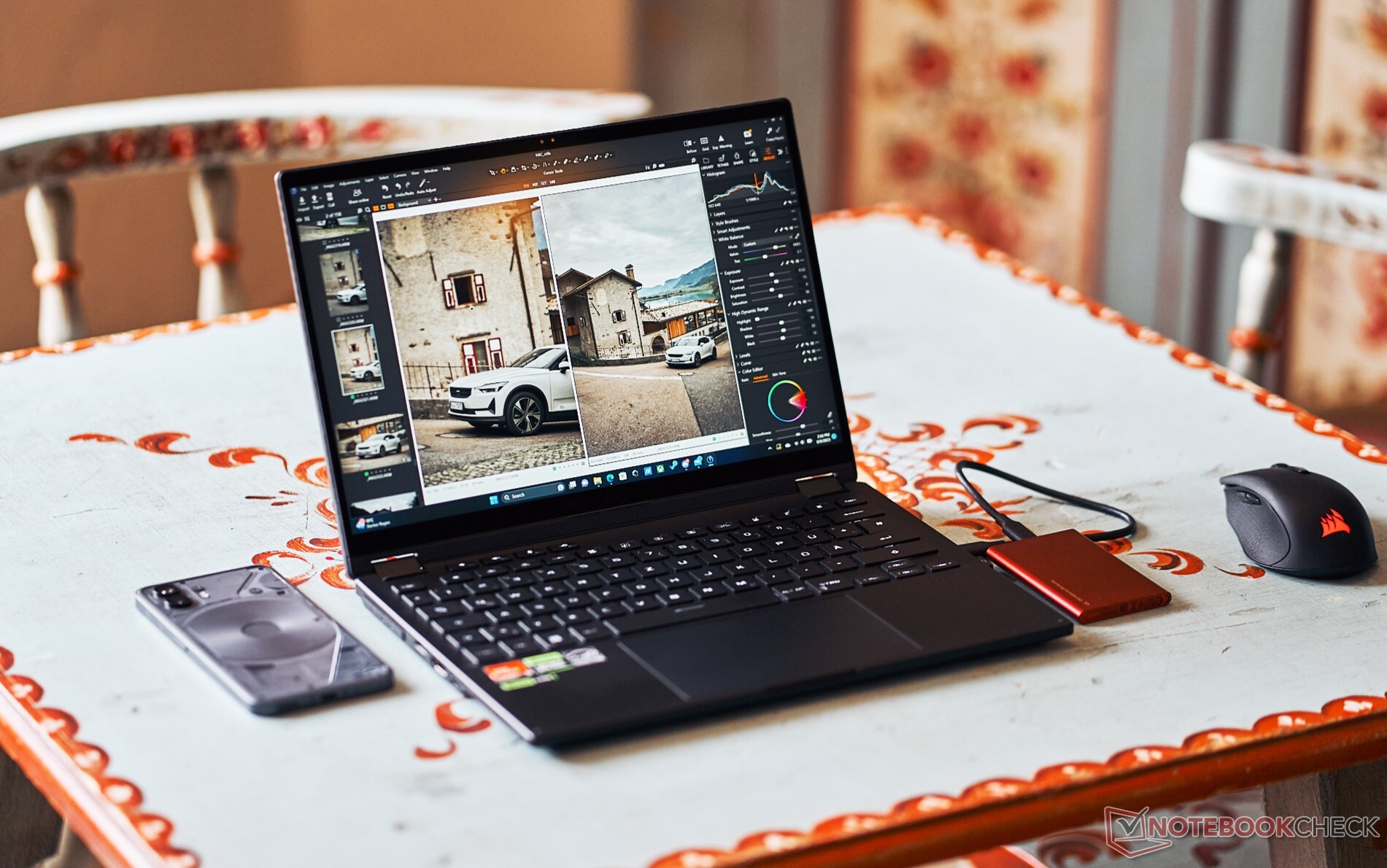


Grand silicon announcements and shiny new gadgets aside, Computex 2026 in Taipei also highlighted the importance of good design.
During a visit to Asus HQ in Taipei, the company's designers spoke with us about the "Asus Design Story," the behind-the-scenes work involved in crafting premium experiences, and how engineering and user experience come together.


A multi-disciplinary approach to design
While it may look simple and straightforward, designing a modern laptop requires a multidisciplinary, hands-on approach that brings together experts from diverse fields.
Asus said it not only leverages this expertise but also draws inspiration from how people use their devices. The goal is to study how users naturally use their laptops and design solutions that adapt to those habits, rather than requiring users to adapt to the hardware.
The design ethos relies largely on the following:
- Understanding changing lifestyles
- User experience (UX) design, empathy-driven and human-centered engineering for intuitive product use
- CMF (Color, Materials, Finish) development to push tactile innovation
- Packaging design and visual communication to delight consumers from unboxing onward


Design thinking methodology
Asus has often brought its designs to global stages, including the high-profile London Design Week and Milan Design Week. According to Asus, three overlapping factors shape laptop innovation:
- Desirability: Are we creating something people genuinely value?
- Feasibility: Technically speaking, can it actually be done?
- Viability: Does it make long-term business sense?
Key elements highlighted at these events reflect the company's design methodology, including a laptop's slimness, structural durability through stylized installations, tactile duality, and the devices' distinct auditory signature.


Prototyping from cardboard to component
A standout philosophy shared during the presentation was, "Every detail has a reason." Asus designers emphasized that the path to true dual-screen productivity with form factors like the Zenbook Duo or ROG Zephyrus Duo GX651 requires years of physical validation.
Surprisingly, it all starts with a piece of cardboard. Long before cutting aluminum or printing PCBs, designers create rudimentary paper mockups to quickly evaluate basic proportions.
The process then moves to angle validation, exploring the optimal viewing and typing angles for diverse real-world use cases. Once these are set, internal support structures are iterated to balance extreme thinness with robust durability, which is especially critical for a convertible.
For laptops like the Zenbook Duo and ROG Zephyrus Duo, engineers conduct thorough validation studies on how users naturally transition between typing, sketching, viewing, and sharing content across two screens.
In fact, a look at the ROG Zephyrus Duo's internal layout reveals the physical manifestation of these design constraints. Engineers must tightly package a massive 99 Whr dual battery bank, an upgraded dual-fan cooling system, and custom immersive audio hardware, all while leaving only a small physical footprint for the central display hinge mechanism.


Getting durability and hinge design right with Ceraluminum
A compelling example of this prototyping in action can be seen in how Asus approaches foundational mechanical elements like the laptop hinge.
Getting laptop hinges right isn't as straightforward as it may seem. This is clear from the fact that most laptop hinges can't be opened with a single finger.
Asus says perfecting a single premium hinge mechanism requires navigating more than 20 engineering parameters and enduring more than 400 experimental iterations.
The process involves an obsessive cycle of sandblasting, polishing, testing, and continuous fine-tuning to find the exact tactile balance between structural stiffness, which prevents display wobble, and smooth one-finger opening.
Asus's key material in this process is what the company calls "Ceraluminum". Ceraluminum is a unique composite that combines aluminum's lightness and durability with ceramic's scratch resistance. Laptops made with this material can withstand up to 25 kg of direct stress.
The company says Ceraluminum not only lets it craft artisan designs with premium, velvety textures, as seen in Zenbooks, but is also 100% recyclable, supporting sustainability.


Award winning designs made for the modern gamer
Asus designers said there is no one-size-fits-all formula applied across the company's product lines; instead, the approach varies widely depending on the audience.
For gamers, Asus maps its design goals across two intersections: hardcore vs. casual gamers, and solo action vs. social interaction. By identifying six distinct core motivators — technology, immersion, competition, captivation, ACG (Anime, Comic, Games) content, and edgy trending — the design center creates tailored aesthetics.
A laptop crafted for an esports gamer demanding aggressive, high-contrast structural aesthetics looks completely different from a machine designed for an immersive, solo open-world gamer who prioritizes clean lines and display panel fidelity.
This attention to detail has earned Asus a streak of global design accolades, including the 2026 iF Design Gold Award and Red Dot "Best of the Best" Awards for the Zenbook Duo and ROG Zephyrus Duo lineups.


Laptop design is understated but extremely paramount
It is often the case that design choices are treated as secondary to primary hardware like the CPU and GPU, among others. While fast components that help with work or gaming are essential, it is the design that lets the hardware fully flex its muscles.
When evaluating a laptop, we place substantial emphasis on the chassis, build quality, cooling, dimensions, and weight in our reviews precisely for this reason. Each of these factors affects not only how well the underlying hardware performs but also how long your investment lasts.
Hearing directly from a top-tier OEM like ASUS provided a much clearer perspective on how companies approach design and how their choices manifest in the end-user experience.

Although we couldn't observe design processes in person, given their complexity and proprietary nature, our interaction with the people directly in charge at Asus Design Center underscored how much goes into finalizing how your shiny new Zenbook/Vivobook/ROG laptop will look and feel.
Asus emphasized that hardware engineering follows design, not the other way around. Tackling challenges like internal component layout, the number of ports, thermals, noise, and power draw while retaining the desired aesthetics without compromising performance is a tall order, particularly in smaller and convertible form factors.
The idea is to ensure that the laptop feels not like a mere assembly of PCBs and silicon but like an extension of your daily life. And Asus impressed upon us that it has the chops to pull it off.
Disclosure: Asus sponsored travel and accommodation for the author's Computex 2026 and company HQ visit
 Add as a preferred source on Google


