The AMD Ryzen 5 1600 is a desktop processor with 6 cores and Hyper Threading (SMT = 12 threads). It is the second fastest Ryzen 5 processor in the beginning of 2017, but the 65-watt TDP is much lower compared to the higher-clocked Ryzen 5 1600X.
The Ryzen 5 1600 has a base frequency of 3.2 GHz and can reach up to 3.6 GHz via Turbo (up to 2 cores) or 3.7 GHz via XFR (also up to 2 cores). The maximum clock for all six cores is 3.4 GHz.
The performance is particularly good in applications. The chip can benefit from its six native cores. They are divided into two clusters (3 cores with dedicated L3 cache each), which connected via Infinity Fabric.
The processor based on the Zen architecture is not fully convincing in games. AMD blames missing optimizations from the gaming producers. Intel's powerful Core i7 quad-cores are usually faster in this case.
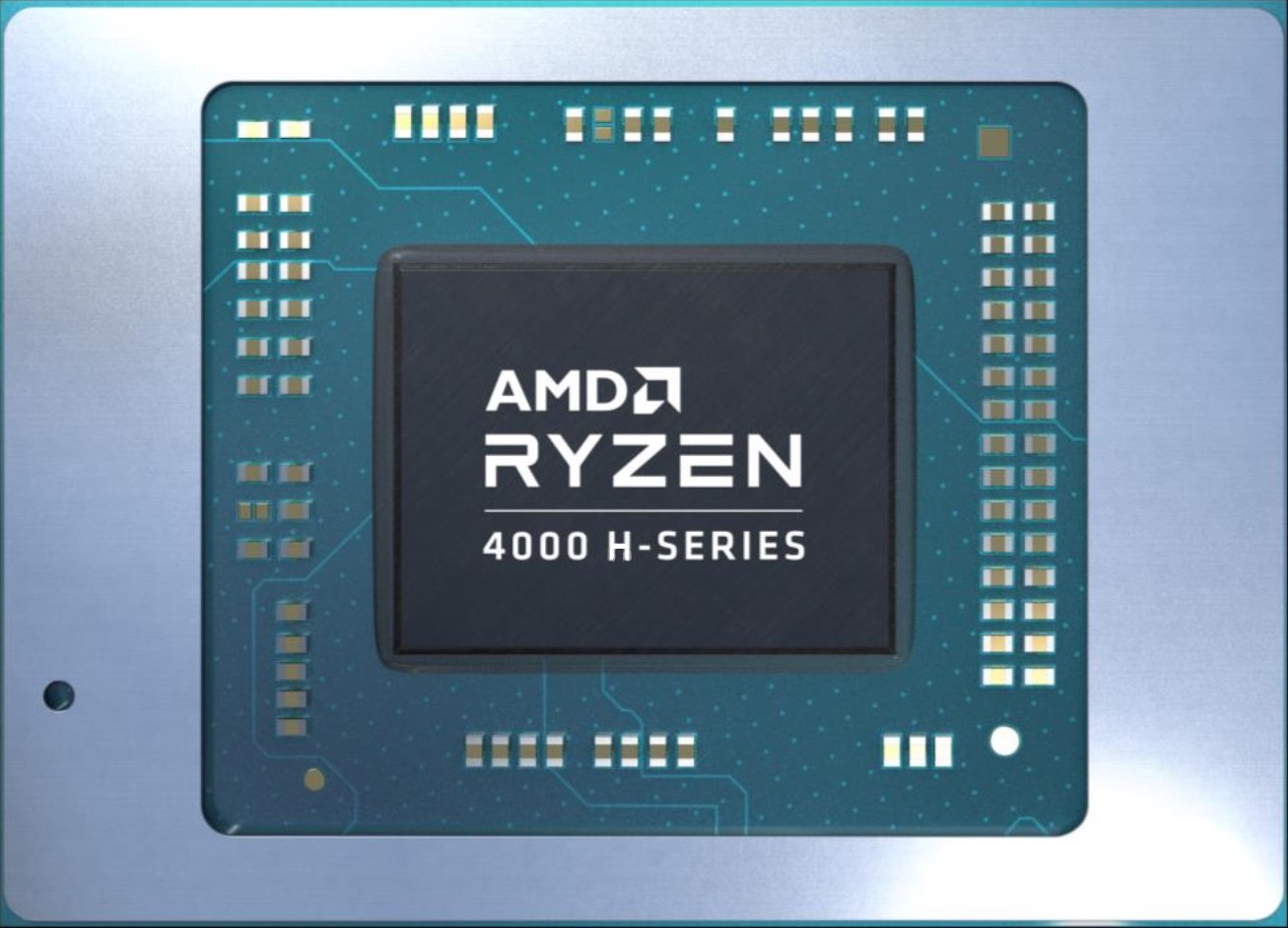
The AMD Ryzen 5 4600H is a mobile SoC for big laptops based on the Renoir architecture. The 4600H integrates six of the eight cores based on the Zen 2 microarchitecture. They are clocked at 3 (guaranteed base clock) to 4 GHz (Turbo) and support SMT / Hyperthreading (12 threads).
In addition to the six CPU cores, the APU also integrates a Radeon RX Vega 6 integrated graphics adapter with 6 CUs and up to 1500 MHz. The dual channel memory controller supports DDR4-3200 and energy efficient LPDDR4-4266 RAM. Furthermore, 8 MB level 3 cache can be found on the chip. See our hub page on the Renoir Processors for more information.
Performance
The average 4600H in our database matches the Intel Core i7-10875H and even the Core i9-10885H, both significantly more costly chips, in multi-thread performance, giving this Ryzen an outrageously high price-to-performance ratio.
Your mileage may vary depending on how high the CPU power limits are and how competent the cooling solution of your system is.
Power consumption
The Ryzen 5 chip has a default TDP (also known as the long-term power limit) of 45 W, a value that laptop makers are free to change to anything between 35 W and 54 W with clock speed and performance changing accordingly as a result. Either way, a high-performance cooling solution is a must for a CPU like this.
The 7 nm TSMC process this APU is built with makes for better-than-average, as of early 2022, energy efficiency.
- Range of benchmark values for this graphics card - Average benchmark values for this graphics card * Smaller numbers mean a higher performance 1 This benchmark is not used for the average calculation
v1.35
log 13. 23:28:35
#0 ran 0s before starting gpusingle class +0s ... 0s
#1 checking url part for id 9132 +0s ... 0s
#2 checking url part for id 11679 +0s ... 0s
#3 redirected to Ajax server, took 1765664915s time from redirect:0 +0s ... 0s
#4 did not recreate cache, as it is less than 5 days old! Created at Sat, 13 Dec 2025 05:18:51 +0100 +0s ... 0s
#5 composed specs +0.004s ... 0.004s
#6 did output specs +0s ... 0.004s
#7 getting avg benchmarks for device 9132 +0.004s ... 0.008s
#8 got single benchmarks 9132 +0.006s ... 0.014s
#9 getting avg benchmarks for device 11679 +0.004s ... 0.018s
#10 got single benchmarks 11679 +0.014s ... 0.031s
#11 got avg benchmarks for devices +0s ... 0.031s
#12 min, max, avg, median took s +0.052s ... 0.083s









 - Average benchmark values for this graphics card


