

Notebookcheck Logo
Teaser
ⓘ Daniel Schmidt

Hidden gem with outstanding design - Nothing Phone (4a) Pro review

Middle Class Royal.

The Nothing Phone (4a) Pro combines an eye-catching design with robust mid-range hardware and modern features. In testing, the smartphone impressed with its bright OLED display, solid battery life, Snapdragon performance, and periscope camera, but also showed weaknesses.
Daniel Schmidt, 👁 Daniel Schmidt, Anton Avdyushkin (translated by DeepL / Ninh Duy) Published 🇩🇪 🇳🇱 ...
5G Android Smartphone Touchscreen

Verdict on the Nothing Phone (4a) Pro

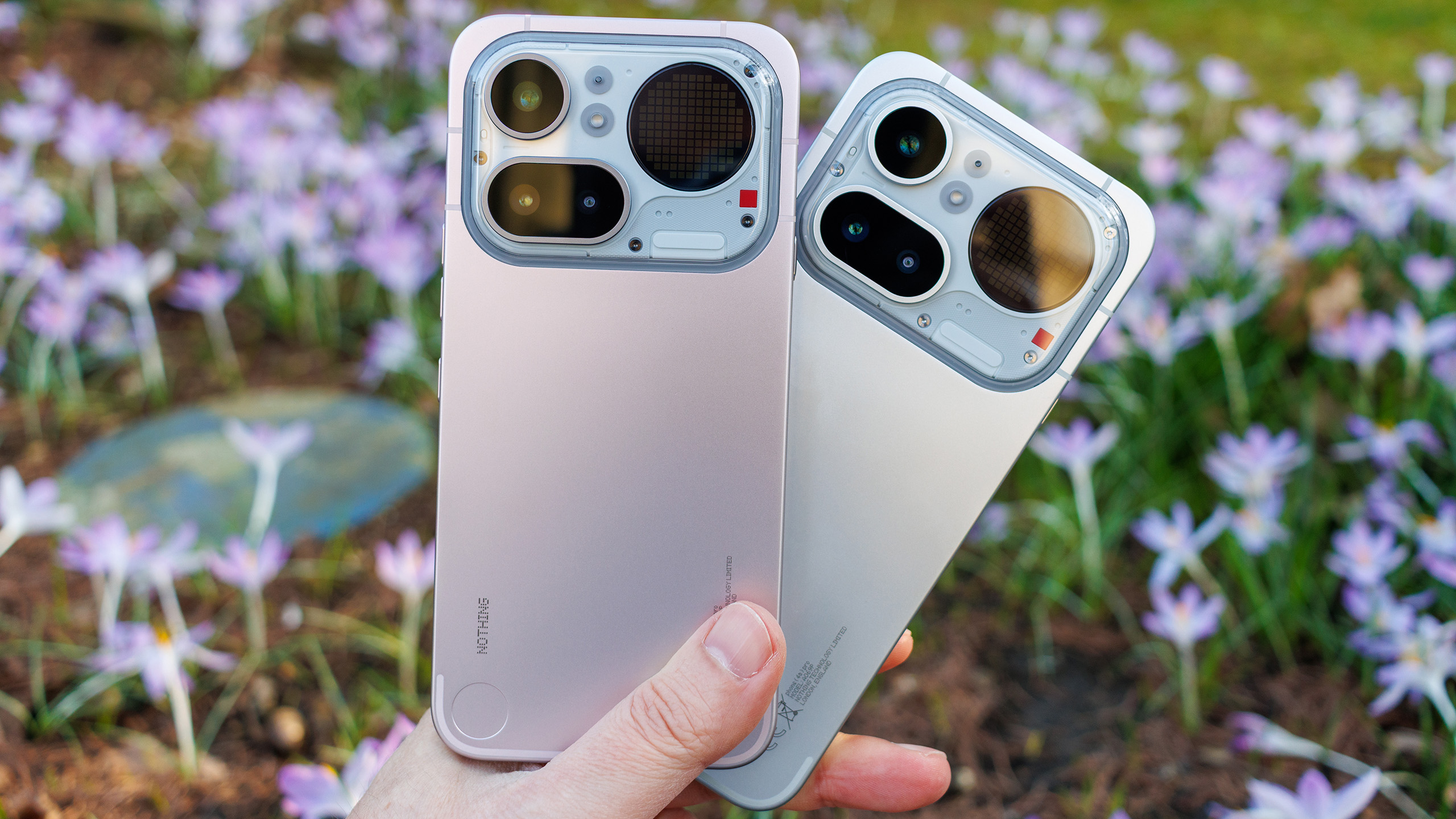
The Nothing Phone (4a) Pro stands out as a distinctive mid-range smartphone with a strong focus on design, solid everyday performance, and some surprising premium features. Particularly noteworthy are the high-quality aluminum unibody, the characteristic glyph back, and modern extras such as Wi-Fi 6E and eSIM support.

In everyday use, the smartphone impresses with a bright OLED display, very good battery life, and stable performance thanks to the Snapdragon SoC. The camera features also set it apart from many of its competitors: the periscope zoom, in particular, delivers strong results in the mid-range and provides a unique selling point.

However, there is also some criticism: the device is not completely waterproof despite its high-quality finish, the ultra-wide-angle camera is not of the same quality, and the video functions fall short of upper-class models. In addition, only three major Android updates are planned, which is somewhat disappointing considering the price.

All in all, the Nothing Phone (4a) Pro is a real insider tip for anyone looking for an eye-catching smartphone with good features, strong battery life, and a solid camera - especially for users who have had enough of the typical one-size-fits-all design of other manufacturers.

Pros

+ high-quality workmanship and attractive design
+ bright OLED
+ long battery life

Cons

- no wireless charging
- not waterproof
- only three years of major updates

Price and availability

The Nothing Phone (4a) Pro has an RRP of 479 euros (8/128 GB) or 549 euros (12/256 GB) and can be purchased directly from Nothing, but is also available from Amazon, among others.

Amazon Logo
  • $551.08
    Nothing Phone (4a) Pro Cell Phone 2026 New, Unlocked Android 16 Smartphone, Triple-Lens Camera, AI Photo Edits, 6.83" 144Hz AMOLED Display, 5080mAh Battery, Dual-SIM Glyph Matrix (Black, 12+256GB)
  • $521.13
    Nothing Phone (4a) Pro Cell Phone 2026 New, Unlocked Android 16 Smartphone, Triple-Lens Camera, AI Photo Edits, 6.83" 144Hz AMOLED Display, 5080mAh Battery, Dual-SIM Glyph Matrix (Pink, 12+256GB)
  • $446.09
    Nothing Phone (4a) Pro Cell Phone 2026 New, Unlocked Android 16 Smartphone, Triple-Lens Camera, AI Photo Edits, 6.83" 144Hz AMOLED Display, 5080mAh Battery, Dual-SIM Glyph Matrix (Black, 8+128GB)

The Nothing Phone (4a) Pro is the successor to the Phone (3a) Pro and has been completely transformed, especially visually, but has also received a small upgrade to the camera setup and a new SoC. Find out everything in our review.

Specifications: Nothing Phone (4a) Pro

Nothing Phone (4a) Pro (Phone (4) Series)
Processor
Qualcomm Snapdragon 7 Gen 4 SM7750-AB 8c/8t, 1 x 2.8 GHz ARM Cortex-A720, 4 x 2.4 GHz ARM Cortex-A720, 3 x 1.8 GHz ARM Cortex-A520, Cortex A520/A720
Graphics adapter
Memory
12 GB 
, LPDDR5x
Display
6.83 inch 20:9, 2800 x 1260 pixel 450 PPI, Capacitive touchscreen, AMOLED, Corning Gorilla Glass 7i, Color depth: 10 bits, glossy: yes, HDR, 144 Hz
Storage
256 GB UFS 3.1 Flash, 256 GB 
, 218.7 GB free
Connections
1 USB 2.0, USB-C Power Delivery (PD), Audio Connections: USB-C, 1 Fingerprint Reader, NFC, Brightness Sensor, Sensors: accelerometer, gyro, proximity, compass, OTG
Networking
Wi-Fi 6E (a/b/g/n = Wi-Fi 4/ac = Wi-Fi 5/ax = Wi-Fi 6/ Wi-Fi 6E 6 GHz), Bluetooth 5.4, GSM, UMTS, LTE, 5G, Dual SIM, LTE, 5G, GPS
Size
height x width x depth (in mm): 7.9 x 163.6 x 76.6 ( = 0.31 x 6.44 x 3.02 in)
Battery
5080 mAh Lithium-Ion, Battery cycles: 1400
Charging
fast charging / Quickcharge
Operating System
Android 16
Camera
Primary Camera: 50 MPix (f/1.9, 24mm) + 50MP (3.5x optical zoom, f/2.9, 80mm) + 8MP (f/2.2, 15mm)
Secondary Camera: 32 MPix (S5KKD1, f/2.2, 1/3.44", 22 / 26 mm)
Additional features
Speakers: Dual, Keyboard: Virtual keyboard, USB-C-Cabel, SIM-Tool, Case, Nothing OS 4.1, 24 Months Warranty, Bluetooth Audio Codecs: SBC, AAC, LDAC | GNSS: GPS (L1), Glonass (L1), BeiDou (B1I, B1C), Galileo (E1), QZSS (L1) | HDR: HLG, HDR10, HDR10+ | DRM Widevine L1 | eSIM | IP65 | Body-SAR: 1.453 W/kg, Head-SAR: 1.281 W/kg | max. charging speed: 50 W (wired), fanless
Released
03/05/2026
Weight
210 g ( = 7.41 oz / 0.46 pounds)
Price
549 Euro
Note: The manufacturer may use components from different suppliers including display panels, drives or memory sticks with similar specifications.


Case and features - Phone (4a) Pro is not waterproof

The Nothing Phone (4a) Pro has an aluminum unibody, which gives the smartphone a high-quality look and rounds out its unusual design. The workmanship is also impressive in other respects, with even gaps and high torsional rigidity. Unfortunately, the (4a) Pro is not completely waterproof, but only protected against water jets in accordance with IP65. However, Nothing claims to have successfully tested the phone's water resistance up to a depth of 25 cm for 20 minutes.

The rest of the features are typical for the class, without any real highlights, apart from the glyph matrix on the back. It can display important notifications, can be configured extensively, and works in a similar way to the Nothing Phone (3) but has fewer LEDs.

Size comparison

163.6 mm / 6.44 in 76.6 mm / 3.02 in 7.9 mm / 0.311 in 210 g0.463 lbs163.2 mm / 6.43 in 78 mm / 3.07 in 7.5 mm / 0.2953 in 194 g0.4277 lbs161.3 mm / 6.35 in 76.6 mm / 3.02 in 7.4 mm / 0.2913 in 190 g0.4189 lbs156.5 mm / 6.16 in 73.3 mm / 2.89 in 9.6 mm / 0.378 in 191.4 g0.422 lbs148 mm / 5.83 in 105 mm / 4.13 in 1 mm / 0.03937 in 1.5 g0.00331 lbs

Communication and operation - Nothing smartphone with Wi-Fi 6E and eSIM support

Like its predecessor, the Nothing Phone (4a) Pro has a pleasant surprise: tri-band Wi-Fi (Wi-Fi 6E) support, rather than just Wi-Fi 6, as stated. The data rates are correspondingly high when the fast 6 GHz network is available.

The voice quality of the smartphone is good when held to the ear, but the suppression of ambient noise reaches its limits when there is a lot of noise. Functions such as WLAN calls, VoLTE, and Vo5G are supported. Two nano-SIM slots are available, and an eSIM can also be integrated. Dual SIM is possible with two physical SIMs or in mixed mode.

An optical fingerprint sensor is integrated into the display for biometric security, which unlocks the Nothing Phone (4a) Pro quickly and reliably. Face recognition via the front camera is also possible. The linear vibration motor offers crisp feedback and can be adjusted in the settings.

The AI button is now located on the left-hand side and can therefore no longer be easily confused with the power button. The so-called Essential Key can be customized in the settings, but is primarily used to keep an AI-supported notebook using screenshots and voice memos.

Networking
Nothing Phone (4a) Pro
Wi-Fi 6E
iperf3 transmit AXE11000 6GHz
1777 (min: 1708) MBit/s ∼99%
iperf3 receive AXE11000 6GHz
1567 (min: 1519) MBit/s ∼100%
Samsung Galaxy S25 FE
Wi-Fi 6E
iperf3 transmit AXE11000
949 (min: 474) MBit/s ∼99%
iperf3 receive AXE11000
1006 (min: 504) MBit/s ∼100%
iperf3 transmit AXE11000 6GHz
1589 (min: 808) MBit/s ∼89%
iperf3 receive AXE11000 6GHz
1188 (min: 1151) MBit/s ∼76%
Xiaomi 15T
Wi-Fi 6E
iperf3 transmit AXE11000
909 (min: 474) MBit/s ∼95%
iperf3 receive AXE11000
895 (min: 825) MBit/s ∼89%
iperf3 transmit AXE11000 6GHz
1475 (min: 452) MBit/s ∼82%
iperf3 receive AXE11000 6GHz
1558 (min: 1521) MBit/s ∼99%
Fairphone 6
Wi-Fi 6E
iperf3 transmit AXE11000 6GHz
1791 (min: 1631) MBit/s ∼100%
iperf3 receive AXE11000 6GHz
1451 (min: 1406) MBit/s ∼93%
Average Wi-Fi 6E
 
iperf3 transmit AXE11000
954 (min: 227) MBit/s ∼100%
iperf3 receive AXE11000
940 (min: 442) MBit/s ∼93%
iperf3 transmit AXE11000 6GHz
1375 (min: 229) MBit/s ∼77%
iperf3 receive AXE11000 6GHz
1340 (min: 598) MBit/s ∼86%
Average of class Smartphone
 
iperf3 transmit AXE11000
694 (min: 52.5) MBit/s ∼73%
iperf3 receive AXE11000
740 (min: 52.2) MBit/s ∼74%
iperf3 transmit AXE11000 6GHz
1264 (min: 287) MBit/s ∼71%
iperf3 receive AXE11000 6GHz
1399 (min: 339) MBit/s ∼89%
05010015020025030035040045050055060065070075080085090095010001050110011501200125013001350140014501500155016001650170017501800Tooltip
Nothing Phone (4a) Pro Wi-Fi 6E; iperf3 transmit AXE11000 6GHz; iperf 3.1.3: Ø1777 (1708-1839)
Samsung Galaxy S25 FE Wi-Fi 6E; iperf3 transmit AXE11000 6GHz; iperf 3.1.3: Ø1562 (808-1664)
Nothing Phone (4a) Pro Wi-Fi 6E; iperf3 receive AXE11000 6GHz; iperf 3.1.3: Ø1567 (1519-1605)
Samsung Galaxy S25 FE Wi-Fi 6E; iperf3 receive AXE11000 6GHz; iperf 3.1.3: Ø1186 (1151-1206)
Samsung Galaxy S25 FE Wi-Fi 6E; iperf3 transmit AXE11000; iperf 3.1.3: Ø934 (474-967)
Samsung Galaxy S25 FE Wi-Fi 6E; iperf3 receive AXE11000; iperf 3.1.3: Ø987 (504-1018)

Software and sustainability - Six years of updates for the Nothing Phone (4a) Pro

Nothing is exemplary, but it does provide some information on sustainability: the packaging is plastic-free, and the smartphone uses 100% recycled aluminum and tin. However, there is no complete sustainability report.

Security patches are distributed for six years, but only three major updates are planned.

Camera - Periscope zoom in the mid-range

Selfie with the Nothing Phone (4a) Pro

The front camera of the Nothing Phone (4a) Pro does a good job and delivers coherent photos in daylight. In low light, however, it quickly becomes noisy and the shutter lag increases.

There are two 50MP sensors on the back: the main sensor and the periscope zoom are both equipped with an OIS and deliver really good results for the mid-range. The latter can even use a digital magnification of 140x, which is not even found in the premium segment in this form, even if the quality is no longer good. The ultra-wide angle delivers only mediocre results. You can find more impressions of the cameras in this article.

Videos are only possible in 4K at 30 FPS with the rear setup, although the zoom can also be used, including a 20x digital zoom. If you are content with Full HD, you can also use 60 FPS and the ultra-wide angle. On the front, only 1080p with up to 60 FPS is possible.

Image comparison

Choose a scene and navigate within the first image. One click changes the position on touchscreens. One click on the zoomed-in image opens the original in a new window. The first image shows the scaled photograph of the test device.

Main cameraMain cameraUltra wide-angle5x ZoomLow-Light
ColorChecker
3.2 ∆E
1.5 ∆E
3.5 ∆E
5.3 ∆E
3.6 ∆E
3.7 ∆E
5.1 ∆E
5.2 ∆E
5.3 ∆E
5.2 ∆E
3.8 ∆E
4.7 ∆E
4.5 ∆E
3.6 ∆E
4.6 ∆E
8.6 ∆E
5.7 ∆E
10.6 ∆E
10 ∆E
5.7 ∆E
5.4 ∆E
3.9 ∆E
5.1 ∆E
4.9 ∆E
ColorChecker Nothing Phone (4a) Pro: 5.11 ∆E min: 1.53 - max: 10.55 ∆E
ColorChecker
17 ∆E
16.5 ∆E
20.8 ∆E
25.4 ∆E
21.9 ∆E
20.8 ∆E
18.2 ∆E
16.3 ∆E
13.4 ∆E
17.5 ∆E
20 ∆E
22.9 ∆E
14.3 ∆E
22.9 ∆E
6.7 ∆E
19.6 ∆E
17.4 ∆E
24.7 ∆E
13 ∆E
13.9 ∆E
18.4 ∆E
25.8 ∆E
21.4 ∆E
13.1 ∆E
ColorChecker Nothing Phone (4a) Pro: 18.41 ∆E min: 6.75 - max: 25.81 ∆E

Display - Bright OLED with high-frequency PWM

Subpixel structure
Subpixel structure

The display of the Nothing Phone (4a) Pro has grown slightly and now measures 6.83 inches (17.35 cm). Nothing claims a brightness of 1,600 cd/m² outdoors and a peak brightness of up to 5,000 cd/m². We can confirm the former, but we cannot get anywhere near 5,000 cd/m² from the smartphone.

The display has a fairly low basic flicker of 90 Hz, which is supposed to be compensated for by a high-frequency PWM dimming of nominally 2,160 Hz. We can confirm the high frequency, but the low-level basic flicker means that complaints from sensitive users cannot be ruled out.

1577
cd/m²
1579
cd/m²
1537
cd/m²
1589
cd/m²
1604
cd/m²
1571
cd/m²
1625
cd/m²
1608
cd/m²
1575
cd/m²
Distribution of brightness
tested with X-Rite i1Pro 3
Maximum: 1625 cd/m² (Nits) Average: 1585 cd/m² Minimum: 2.23 cd/m²
Brightness Distribution: 95 %
Center on Battery: 1604 cd/m²
Contrast: ∞:1 (Black: 0 cd/m²)
ΔE ColorChecker Calman: 1.9 | ∀{0.5-29.43 Ø4.73}
ΔE Greyscale Calman: 2.9 | ∀{0.09-98 Ø4.98}
98.7% sRGB (Calman 2D)
Gamma: 2.27
CCT: 7083 K
Nothing Phone (4a) Pro
AMOLED, 2800x1260, 6.8"
Samsung Galaxy S25 FE
AMOLED, 2340x1080, 6.7"
Xiaomi 15T
AMOLED, 2772x1280, 6.8"
Fairphone 6
pOLED, 2484x1116, 6.3"
Screen
-25%
-4%
-14%
Brightness middle (cd/m²)
1604
1136
-29%
1070
-33%
737
-54%
Brightness (cd/m²)
1585
1132
-29%
1079
-32%
736
-54%
Brightness Distribution (%)
95
98
3%
94
-1%
97
2%
Black Level * (cd/m²)
Colorchecker dE 2000 *
1.9
3.5
-84%
1.5
21%
1.6
16%
Colorchecker dE 2000 max. *
4.3
5.5
-28%
3.9
9%
3.9
9%
Greyscale dE 2000 *
2.9
2.4
17%
2.5
14%
3
-3%
Gamma
2.27 97%
2.02 109%
2.24 98%
2.24 98%
CCT
7083 92%
6322 103%
6648 98%
6706 97%

* ... smaller is better

Display / APL18 Peak Brightness
Xiaomi 15T
Mali-G720 MP7, Dimensity 8400, 512 GB UFS 4.1 Flash
3310 cd/m² +107%
Samsung Galaxy S25 FE
Xclipse 940, Exynos 2400, 256 GB UFS 4.0 Flash
1863 cd/m² +17%
Nothing Phone (4a) Pro
Adreno 722, SD 7 Gen 4, 256 GB UFS 3.1 Flash
1596 cd/m²
Fairphone 6
Adreno 810, SD 7s Gen 3, 256 GB UFS 3.1 Flash
1458 cd/m² -9%
Display / HDR Peak Brightness
Xiaomi 15T
Mali-G720 MP7, Dimensity 8400, 512 GB UFS 4.1 Flash
3267 cd/m² +109%
Samsung Galaxy S25 FE
Xclipse 940, Exynos 2400, 256 GB UFS 4.0 Flash
1990 cd/m² +27%
Fairphone 6
Adreno 810, SD 7s Gen 3, 256 GB UFS 3.1 Flash
1920 cd/m² +23%
Nothing Phone (4a) Pro
Adreno 722, SD 7 Gen 4, 256 GB UFS 3.1 Flash
1564 cd/m²

Screen Flickering / PWM (Pulse-Width Modulation)

To dim the screen, some notebooks will simply cycle the backlight on and off in rapid succession - a method called Pulse Width Modulation (PWM) . This cycling frequency should ideally be undetectable to the human eye. If said frequency is too low, users with sensitive eyes may experience strain or headaches or even notice the flickering altogether.
Screen flickering / PWM detected 90 Hz
Amplitude: 13.58 %
Secondary Frequency: 2173 Hz

The display backlight flickers at 90 Hz (worst case, e.g., utilizing PWM) .

The frequency of 90 Hz is very low, so the flickering may cause eyestrain and headaches after extended use.

In comparison: 52 % of all tested devices do not use PWM to dim the display. If PWM was detected, an average of 7819 (minimum: 5 - maximum: 343500) Hz was measured.

minimum display brightness
min.
25 % display brightness
25 %
50 % display brightness
50 %
75 % display brightness
75 %
maximum manual display brightness
100 %

Measurement series with fixed zoom level and different brightness settings (The amplitude curve at minimum brightness looks flat, but this is due to the scaling. The info box shows the enlarged version of the amplitude at minimum brightness)

Grayscale (colors: standard, target color space: sRGB)
Colors (colors: standard, target color space: sRGB)
Color space (colors: standard, target color space: sRGB)

Display Response Times

Display response times show how fast the screen is able to change from one color to the next. Slow response times can lead to afterimages and can cause moving objects to appear blurry (ghosting). Gamers of fast-paced 3D titles should pay special attention to fast response times.
       Response Time Black to White
0.84 ms ... rise ↗ and fall ↘ combined↗ 0.418 ms rise
↘ 0.4175 ms fall
The screen shows very fast response rates in our tests and should be very well suited for fast-paced gaming.
In comparison, all tested devices range from 0.1 (minimum) to 240 (maximum) ms. » 3 % of all devices are better.
This means that the measured response time is better than the average of all tested devices (19.9 ms).
       Response Time 50% Grey to 80% Grey
0.64 ms ... rise ↗ and fall ↘ combined↗ 0.307 ms rise
↘ 0.3305 ms fall
The screen shows very fast response rates in our tests and should be very well suited for fast-paced gaming.
In comparison, all tested devices range from 0.165 (minimum) to 636 (maximum) ms. » 2 % of all devices are better.
This means that the measured response time is better than the average of all tested devices (31.1 ms).
Outdoors
Viewing angle stability

Performance, emissions and battery life - Phone (4a) Pro with Snapdragon SoC

The Nothing Phone (4a) Pro is powered by a Snapdragon 7 Gen 4 with 8 or 12 GB LPDDR5x RAM, which can deliver full performance even under constant load. Although the resulting surface temperatures can be high, they remain within acceptable limits.

The speakers deliver usable sound but are not outstanding. The battery life, on the other hand, is very good. Wired fast charging with up to 50 watts is also supported. With a suitable power supply unit, a full charge takes 67 minutes in the test (50%: 22 min., 80%: 38 min.).

Geekbench 6.6
Single-Core
Samsung Galaxy S25 FE
Samsung Exynos 2400, Xclipse 940, 8192
2118 Points +60%
Average of class Smartphone
  (196 - 3883, n=199, last 2 years)
1848 Points +40%
Xiaomi 15T
MediaTek Dimensity 8400, Mali-G720 MP7, 12288
1645 Points +25%
Nothing Phone (4a) Pro
Qualcomm Snapdragon 7 Gen 4 SM7750-AB, Adreno 722, 12288
1320 Points
Average Qualcomm Snapdragon 7 Gen 4 SM7750-AB
  (1278 - 1329, n=5)
1308 Points -1%
Fairphone 6
Qualcomm Snapdragon 7s Gen 3, Adreno 810, 8192
1188 Points -10%
Multi-Core
Samsung Galaxy S25 FE
Samsung Exynos 2400, Xclipse 940, 8192
6839 Points +63%
Xiaomi 15T
MediaTek Dimensity 8400, Mali-G720 MP7, 12288
6178 Points +48%
Average of class Smartphone
  (830 - 11811, n=199, last 2 years)
5492 Points +31%
Nothing Phone (4a) Pro
Qualcomm Snapdragon 7 Gen 4 SM7750-AB, Adreno 722, 12288
4188 Points
Average Qualcomm Snapdragon 7 Gen 4 SM7750-AB
  (3968 - 4188, n=5)
4052 Points -3%
Fairphone 6
Qualcomm Snapdragon 7s Gen 3, Adreno 810, 8192
3426 Points -18%
3DMark
Wild Life Score
Average Qualcomm Snapdragon 7 Gen 4 SM7750-AB
  (7589 - 7687, n=4)
7633 Points +1%
Nothing Phone (4a) Pro
Qualcomm Snapdragon 7 Gen 4 SM7750-AB, Adreno 722, 12288
7589 Points
Fairphone 6
Qualcomm Snapdragon 7s Gen 3, Adreno 810, 8192
4376 Points -42%
Average of class Smartphone
  (270 - 7687, n=87, last 2 years)
3064 Points -60%
Samsung Galaxy S25 FE
Samsung Exynos 2400, Xclipse 940, 8192
Points -100%
Wild Life Unlimited Score
Samsung Galaxy S25 FE
Samsung Exynos 2400, Xclipse 940, 8192
15464 Points +100%
Xiaomi 15T
MediaTek Dimensity 8400, Mali-G720 MP7, 12288
13648 Points +77%
Average of class Smartphone
  (271 - 30892, n=181, last 2 years)
12345 Points +60%
Nothing Phone (4a) Pro
Qualcomm Snapdragon 7 Gen 4 SM7750-AB, Adreno 722, 12288
7722 Points
Average Qualcomm Snapdragon 7 Gen 4 SM7750-AB
  (7662 - 7722, n=4)
7682 Points -1%
Fairphone 6
Qualcomm Snapdragon 7s Gen 3, Adreno 810, 8192
4457 Points -42%
Wild Life Extreme
Samsung Galaxy S25 FE
Samsung Exynos 2400, Xclipse 940, 8192
4421 Points +111%
Xiaomi 15T
MediaTek Dimensity 8400, Mali-G720 MP7, 12288
3954 Points +89%
Average of class Smartphone
  (61 - 8263, n=182, last 2 years)
3244 Points +55%
Nothing Phone (4a) Pro
Qualcomm Snapdragon 7 Gen 4 SM7750-AB, Adreno 722, 12288
2094 Points
Average Qualcomm Snapdragon 7 Gen 4 SM7750-AB
  (2062 - 2098, n=4)
2084 Points 0%
Fairphone 6
Qualcomm Snapdragon 7s Gen 3, Adreno 810, 8192
1120 Points -47%
Wild Life Extreme Unlimited
Samsung Galaxy S25 FE
Samsung Exynos 2400, Xclipse 940, 8192
4142 Points +101%
Xiaomi 15T
MediaTek Dimensity 8400, Mali-G720 MP7, 12288
3943 Points +91%
Average of class Smartphone
  (62 - 8271, n=181, last 2 years)
3230 Points +57%
Average Qualcomm Snapdragon 7 Gen 4 SM7750-AB
  (2042 - 2104, n=4)
2072 Points 0%
Nothing Phone (4a) Pro
Qualcomm Snapdragon 7 Gen 4 SM7750-AB, Adreno 722, 12288
2063 Points
Fairphone 6
Qualcomm Snapdragon 7s Gen 3, Adreno 810, 8192
1130 Points -45%
GFXBench
on screen Aztec Ruins Normal Tier Onscreen
Samsung Galaxy S25 FE
Samsung Exynos 2400, Xclipse 940, 8192
119 fps +78%
Xiaomi 15T
MediaTek Dimensity 8400, Mali-G720 MP7, 12288
84 fps +25%
Nothing Phone (4a) Pro
Qualcomm Snapdragon 7 Gen 4 SM7750-AB, Adreno 722, 12288
67 fps
Average Qualcomm Snapdragon 7 Gen 4 SM7750-AB
  (54 - 67, n=4)
61.8 fps -8%
Average of class Smartphone
  (6.2 - 166, n=194, last 2 years)
61.8 fps -8%
Fairphone 6
Qualcomm Snapdragon 7s Gen 3, Adreno 810, 8192
47 fps -30%
1920x1080 Aztec Ruins Normal Tier Offscreen
Samsung Galaxy S25 FE
Samsung Exynos 2400, Xclipse 940, 8192
156 fps +59%
Xiaomi 15T
MediaTek Dimensity 8400, Mali-G720 MP7, 12288
144 fps +47%
Average of class Smartphone
  (3.4 - 378, n=194, last 2 years)
131.4 fps +34%
Nothing Phone (4a) Pro
Qualcomm Snapdragon 7 Gen 4 SM7750-AB, Adreno 722, 12288
98 fps
Average Qualcomm Snapdragon 7 Gen 4 SM7750-AB
  (86 - 98, n=4)
92.5 fps -6%
Fairphone 6
Qualcomm Snapdragon 7s Gen 3, Adreno 810, 8192
55 fps -44%
on screen Aztec Ruins High Tier Onscreen
Samsung Galaxy S25 FE
Samsung Exynos 2400, Xclipse 940, 8192
108 fps +163%
Xiaomi 15T
MediaTek Dimensity 8400, Mali-G720 MP7, 12288
53 fps +29%
Average of class Smartphone
  (3.7 - 144, n=195, last 2 years)
50.2 fps +22%
Nothing Phone (4a) Pro
Qualcomm Snapdragon 7 Gen 4 SM7750-AB, Adreno 722, 12288
41 fps
Average Qualcomm Snapdragon 7 Gen 4 SM7750-AB
  (34 - 41, n=4)
38.5 fps -6%
Fairphone 6
Qualcomm Snapdragon 7s Gen 3, Adreno 810, 8192
29 fps -29%
2560x1440 Aztec Ruins High Tier Offscreen
Samsung Galaxy S25 FE
Samsung Exynos 2400, Xclipse 940, 8192
84 fps +133%
Xiaomi 15T
MediaTek Dimensity 8400, Mali-G720 MP7, 12288
55 fps +53%
Average of class Smartphone
  (1.2 - 151, n=194, last 2 years)
50.7 fps +41%
Nothing Phone (4a) Pro
Qualcomm Snapdragon 7 Gen 4 SM7750-AB, Adreno 722, 12288
36 fps
Average Qualcomm Snapdragon 7 Gen 4 SM7750-AB
  (33 - 38, n=4)
36 fps 0%
Fairphone 6
Qualcomm Snapdragon 7s Gen 3, Adreno 810, 8192
21 fps -42%
3840x2160 4K Aztec Ruins High Tier Offscreen
Samsung Galaxy S25 FE
Samsung Exynos 2400, Xclipse 940, 8192
34 fps +113%
Xiaomi 15T
MediaTek Dimensity 8400, Mali-G720 MP7, 12288
25 fps +56%
Average of class Smartphone
  (0.54 - 63, n=195, last 2 years)
23.1 fps +44%
Nothing Phone (4a) Pro
Qualcomm Snapdragon 7 Gen 4 SM7750-AB, Adreno 722, 12288
16 fps
Average Qualcomm Snapdragon 7 Gen 4 SM7750-AB
  (15 - 16, n=4)
15.5 fps -3%
Fairphone 6
Qualcomm Snapdragon 7s Gen 3, Adreno 810, 8192
9.1 fps -43%
Geekbench AI
Single Precision NPU 1.7
Xiaomi 15T
MediaTek Dimensity 8400, Mali-G720 MP7, 12288
998 Points +262%
Average of class Smartphone
  (80 - 5210, n=107, last 2 years)
678 Points +146%
Samsung Galaxy S25 FE
Samsung Exynos 2400, Xclipse 940, 8192
324 Points +17%
Nothing Phone (4a) Pro
Qualcomm Snapdragon 7 Gen 4 SM7750-AB, Adreno 722, 12288
276 Points
Fairphone 6
Qualcomm Snapdragon 7s Gen 3, Adreno 810, 8192
240 Points -13%
Average Qualcomm Snapdragon 7 Gen 4 SM7750-AB
  (168 - 276, n=4)
234 Points -15%
Half Precision NPU 1.7
Xiaomi 15T
MediaTek Dimensity 8400, Mali-G720 MP7, 12288
6833 Points +2376%
Average of class Smartphone
  (80 - 36297, n=107, last 2 years)
2671 Points +868%
Samsung Galaxy S25 FE
Samsung Exynos 2400, Xclipse 940, 8192
342 Points +24%
Nothing Phone (4a) Pro
Qualcomm Snapdragon 7 Gen 4 SM7750-AB, Adreno 722, 12288
276 Points
Fairphone 6
Qualcomm Snapdragon 7s Gen 3, Adreno 810, 8192
241 Points -13%
Average Qualcomm Snapdragon 7 Gen 4 SM7750-AB
  (165 - 276, n=4)
233 Points -16%
Quantized NPU 1.7
Xiaomi 15T
MediaTek Dimensity 8400, Mali-G720 MP7, 12288
8965 Points +1312%
Average of class Smartphone
  (124 - 49889, n=107, last 2 years)
3977 Points +526%
Samsung Galaxy S25 FE
Samsung Exynos 2400, Xclipse 940, 8192
1096 Points +73%
Nothing Phone (4a) Pro
Qualcomm Snapdragon 7 Gen 4 SM7750-AB, Adreno 722, 12288
635 Points
Fairphone 6
Qualcomm Snapdragon 7s Gen 3, Adreno 810, 8192
547 Points -14%
Average Qualcomm Snapdragon 7 Gen 4 SM7750-AB
  (371 - 635, n=4)
533 Points -16%
CrossMark
Overall
Xiaomi 15T
MediaTek Dimensity 8400, Mali-G720 MP7, 12288
1243 Points +15%
Average of class Smartphone
  (376 - 2856, n=116, last 2 years)
1213 Points +12%
Nothing Phone (4a) Pro
Qualcomm Snapdragon 7 Gen 4 SM7750-AB, Adreno 722, 12288
1081 Points
Average Qualcomm Snapdragon 7 Gen 4 SM7750-AB
  (1009 - 1081, n=3)
1037 Points -4%
Fairphone 6
Qualcomm Snapdragon 7s Gen 3, Adreno 810, 8192
774 Points -28%
Samsung Galaxy S25 FE
Samsung Exynos 2400, Xclipse 940, 8192
Points -100%
Productivity
Average of class Smartphone
  (388 - 2366, n=116, last 2 years)
1100 Points +26%
Xiaomi 15T
MediaTek Dimensity 8400, Mali-G720 MP7, 12288
882 Points +1%
Nothing Phone (4a) Pro
Qualcomm Snapdragon 7 Gen 4 SM7750-AB, Adreno 722, 12288
874 Points
Average Qualcomm Snapdragon 7 Gen 4 SM7750-AB
  (823 - 874, n=3)
846 Points -3%
Fairphone 6
Qualcomm Snapdragon 7s Gen 3, Adreno 810, 8192
821 Points -6%
Samsung Galaxy S25 FE
Samsung Exynos 2400, Xclipse 940, 8192
Points -100%
Creativity
Xiaomi 15T
MediaTek Dimensity 8400, Mali-G720 MP7, 12288
1172 Points +49%
Average of class Smartphone
  (310 - 2123, n=116, last 2 years)
1000 Points +27%
Nothing Phone (4a) Pro
Qualcomm Snapdragon 7 Gen 4 SM7750-AB, Adreno 722, 12288
788 Points
Average Qualcomm Snapdragon 7 Gen 4 SM7750-AB
  (766 - 788, n=3)
774 Points -2%
Fairphone 6
Qualcomm Snapdragon 7s Gen 3, Adreno 810, 8192
696 Points -12%
Samsung Galaxy S25 FE
Samsung Exynos 2400, Xclipse 940, 8192
Points -100%
Responsiveness
Nothing Phone (4a) Pro
Qualcomm Snapdragon 7 Gen 4 SM7750-AB, Adreno 722, 12288
5275 Points
Xiaomi 15T
MediaTek Dimensity 8400, Mali-G720 MP7, 12288
5003 Points -5%
Average Qualcomm Snapdragon 7 Gen 4 SM7750-AB
  (4362 - 5275, n=3)
4796 Points -9%
Average of class Smartphone
  (466 - 13042, n=116, last 2 years)
3662 Points -31%
Fairphone 6
Qualcomm Snapdragon 7s Gen 3, Adreno 810, 8192
889 Points -83%
Samsung Galaxy S25 FE
Samsung Exynos 2400, Xclipse 940, 8192
Points -100%
Jetstream 2 - 2.0 Total
Samsung Galaxy S25 FE
Samsung Exynos 2400, Xclipse 940, 8192
210.247 Points +4%
Nothing Phone (4a) Pro
Qualcomm Snapdragon 7 Gen 4 SM7750-AB, Adreno 722, 12288
203.079 Points
Average Qualcomm Snapdragon 7 Gen 4 SM7750-AB
  (132.2 - 203, n=3)
169.4 Points -17%
Average of class Smartphone
  (59.7 - 423, n=131, last 2 years)
158.5 Points -22%
Fairphone 6
Qualcomm Snapdragon 7s Gen 3, Adreno 810, 8192
153.316 Points -25%
Nothing Phone (4a) ProSamsung Galaxy S25 FEXiaomi 15TFairphone 6Average 256 GB UFS 3.1 FlashAverage of class Smartphone
AndroBench 3-5
15%
-27%
-2%
-28%
-9%
Sequential Read 256KB (MB/s)
1977.37
3756.44
90%
1954.45
-1%
1973.22
0%
1767 ?(950 - 3497, n=121)
-11%
Sequential Write 256KB (MB/s)
1738.18
2450.19
41%
1879.62
8%
2006.71
15%
Random Read 4KB (MB/s)
409.28
382.44
-7%
278.9
-32%
358.89
-12%
Random Write 4KB (MB/s)
547.62
198.68
-64%
89.68
-84%
487.48
-11%
Max. Load
 46.7 °C
116 F
48.2 °C
119 F
47.4 °C
117 F
 
 47.6 °C
118 F
47.9 °C
118 F
47.2 °C
117 F
 
 45 °C
113 F
46.1 °C
115 F
44.4 °C
112 F
 
Maximum: 48.2 °C = 119 F
Average: 46.7 °C = 116 F
43.4 °C
110 F
45.2 °C
113 F
45.3 °C
114 F
42 °C
108 F
44.7 °C
112 F
43.6 °C
110 F
42.5 °C
109 F
44 °C
111 F
44.2 °C
112 F
Maximum: 45.3 °C = 114 F
Average: 43.9 °C = 111 F
Room Temperature 20.9 °C = 70 F | Fluke t3000FC (calibrated) & Voltcraft IR-260
(-) The average temperature for the upper side under maximal load is 46.7 °C / 116 F, compared to the average of 32.9 °C / 91 F for the devices in the class Smartphone.
(-) The maximum temperature on the upper side is 48.2 °C / 119 F, compared to the average of 35.3 °C / 96 F, ranging from 21.9 to 247 °C for the class Smartphone.
(-) The bottom heats up to a maximum of 45.3 °C / 114 F, compared to the average of 34 °C / 93 F
(+) In idle usage, the average temperature for the upper side is 30.7 °C / 87 F, compared to the device average of 32.9 °C / 91 F.

3DMark Stress Tests

3DMark
Wild Life Stress Test Stability
Nothing Phone (4a) Pro
Adreno 722, SD 7 Gen 4, 256 GB UFS 3.1 Flash
99.5 %
Fairphone 6
Adreno 810, SD 7s Gen 3, 256 GB UFS 3.1 Flash
98.8 % -1%
Xiaomi 15T
Mali-G720 MP7, Dimensity 8400, 512 GB UFS 4.1 Flash
96.3 % -3%
Samsung Galaxy S25 FE
Xclipse 940, Exynos 2400, 256 GB UFS 4.0 Flash
53.4 % -46%
Wild Life Extreme Stress Test
Nothing Phone (4a) Pro
Adreno 722, SD 7 Gen 4, 256 GB UFS 3.1 Flash
97.7 %
Xiaomi 15T
Mali-G720 MP7, Dimensity 8400, 512 GB UFS 4.1 Flash
77.3 % -21%
Samsung Galaxy S25 FE
Xclipse 940, Exynos 2400, 256 GB UFS 4.0 Flash
53.8 % -45%
Steel Nomad Light Stress Test Stability
Fairphone 6
Adreno 810, SD 7s Gen 3, 256 GB UFS 3.1 Flash
99 % +1%
Nothing Phone (4a) Pro
Adreno 722, SD 7 Gen 4, 256 GB UFS 3.1 Flash
98.2 %
Xiaomi 15T
Mali-G720 MP7, Dimensity 8400, 512 GB UFS 4.1 Flash
88.5 % -10%
Samsung Galaxy S25 FE
Xclipse 940, Exynos 2400, 256 GB UFS 4.0 Flash
59.7 % -39%
0510152025303540455055606570758085Tooltip
Nothing Phone (4a) Pro Adreno 722, SD 7 Gen 4, 256 GB UFS 3.1 Flash; Wild Life Extreme Stress Test; 1.1.14.3: Ø12.5 (12.3-12.6)
Samsung Galaxy S25 FE Xclipse 940, Exynos 2400, 256 GB UFS 4.0 Flash; Wild Life Extreme Stress Test; 1.1.14.1: Ø16.4 (13.9-25.8)
Nothing Phone (4a) Pro Adreno 722, SD 7 Gen 4, 256 GB UFS 3.1 Flash; Wild Life Stress Test Stability: Ø45.7 (45.6-45.8)
Samsung Galaxy S25 FE Xclipse 940, Exynos 2400, 256 GB UFS 4.0 Flash; Wild Life Stress Test Stability; 0.0.0.0: Ø57.8 (47.6-89.1)
Nothing Phone (4a) Pro Adreno 722, SD 7 Gen 4, 256 GB UFS 3.1 Flash; Steel Nomad Light Stress Test Stability; 1.0.6.2: Ø5.75 (5.67-5.77)
Samsung Galaxy S25 FE Xclipse 940, Exynos 2400, 256 GB UFS 4.0 Flash; Steel Nomad Light Stress Test Stability; 1.0.6.1: Ø9.81 (8.65-14.5)
dB(A) 0102030405060708090Deep BassMiddle BassHigh BassLower RangeMidsHigher MidsLower HighsMid HighsUpper HighsSuper Highs2036.338.22530.324.4312724.94039.836.95042.341.16324258023.627.310021.226.912520.440.116022.651.520019.850.325017.851.531514.956.340016.253.650014.560.963012.965.580012.869100011.269.8125012.176.3160011.980.8200011.479.525001279.3315012.179.7400013.378.8500013.171.1630012.971.8800013731000012.8761250012.874.31600014.258.5SPL25.388.9N0.771.8median 13median 71.1Delta1.910.336.939.235.438.227.543.228.438.829.841.923.240.419.540.119.441.720.147.217.652.318.455.715.55812.762.511.462.212.966.711.767.811.374.812.280.213.181.115.178.613.180.11382.513.385.213.379.913.379.513.678.913.678.113.678.313.7741466.725.492.20.791.1median 13.3median 78.11.18.2hearing rangehide median Pink NoiseNothing Phone (4a) ProXiaomi 15T
Frequency diagram (checkboxes can be checked and unchecked to compare devices)
Nothing Phone (4a) Pro audio analysis

(+) | speakers can play relatively loud (88.9 dB)
Bass 100 - 315 Hz
(-) | nearly no bass - on average 25% lower than median
(±) | linearity of bass is average (9.3% delta to prev. frequency)
Mids 400 - 2000 Hz
(±) | reduced mids - on average 7.5% lower than median
(+) | mids are linear (6.7% delta to prev. frequency)
Highs 2 - 16 kHz
(+) | balanced highs - only 4.6% away from median
(+) | highs are linear (3.5% delta to prev. frequency)
Overall 100 - 16.000 Hz
(±) | linearity of overall sound is average (19% difference to median)
Compared to same class
» 24% of all tested devices in this class were better, 9% similar, 67% worse
» The best had a delta of 11%, average was 34%, worst was 134%
Compared to all devices tested
» 45% of all tested devices were better, 7% similar, 48% worse
» The best had a delta of 4%, average was 24%, worst was 134%

Xiaomi 15T audio analysis

(+) | speakers can play relatively loud (92.2 dB)
Bass 100 - 315 Hz
(-) | nearly no bass - on average 25.2% lower than median
(+) | bass is linear (5.8% delta to prev. frequency)
Mids 400 - 2000 Hz
(±) | reduced mids - on average 6.1% lower than median
(+) | mids are linear (4.5% delta to prev. frequency)
Highs 2 - 16 kHz
(+) | balanced highs - only 2.3% away from median
(+) | highs are linear (2.8% delta to prev. frequency)
Overall 100 - 16.000 Hz
(±) | linearity of overall sound is average (15.9% difference to median)
Compared to same class
» 5% of all tested devices in this class were better, 5% similar, 91% worse
» The best had a delta of 11%, average was 34%, worst was 134%
Compared to all devices tested
» 25% of all tested devices were better, 5% similar, 70% worse
» The best had a delta of 4%, average was 24%, worst was 134%

Battery Runtime
WiFi Websurfing (Chrome 146)
18h 00min
Battery runtime - WiFi v1.3
Nothing Phone (4a) Pro
5080 mAh
18 h
Samsung Galaxy S25 FE
4900 mAh
15.1 h
Xiaomi 15T
5500 mAh
17.2 h
Fairphone 6
4415 mAh
16.5 h

Notebookcheck overall rating

The Nothing Phone (4a) Pro impresses as a stylish mid-range smartphone with a strong battery, good performance and unusually strong periscope zoom, but weakens in terms of water protection and update supply.

Nothing Phone (4a) Pro - 05/07/2026 v8
Daniel Schmidt

Chassis
92%
Keyboard
67 / 75 → 89%
Pointing Device
91%
Connectivity
51 / 69 → 73%
Weight
88%
Battery
91%
Display
91%
Games Performance
33 / 55 → 59%
Application Performance
67 / 85 → 79%
AI Performance
19%
Temperature
82%
Noise
100%
Audio
76 / 90 → 84%
Camera
79%
Average
74%
83%
Smartphone - Weighted Average
CO2 Emissions
89.7%
Materials
50%
Packaging
95%
Power Use
91.1%
Repairability
40%
Software Updates
83.3%
Recycle Logo Total Sustainability Score: 74.9%

Possible alternatives in comparison

Image
Model / Review
Price
Weight
Drive
Display
1.
82.5%
Nothing Phone (4a) Pro
Qualcomm Snapdragon 7 Gen 4 SM7750-AB ⎘
Qualcomm Adreno 722 ⎘
12 GB Memory, 256 GB UFS 3.1
Amazon: List Price: 549€210 g256 GB UFS 3.1 Flash6.83"
2800x1260
450 PPI
AMOLED
2.
85.6%
Samsung Galaxy S25 FE
Samsung Exynos 2400 ⎘
Samsung Xclipse 940 ⎘
8 GB Memory, 256 GB UFS 4.x
Amazon: List Price: 809€190 g256 GB UFS 4.0 Flash6.70"
2340x1080
382 PPI
AMOLED
3.
84.8%
Xiaomi 15T
Xiaomi 15T
MediaTek Dimensity 8400 ⎘
ARM Mali-G720 MP7 ⎘
12 GB Memory, 512 GB UFS 4.x
Amazon: List Price: 650€194 g512 GB UFS 4.1 Flash6.83"
2772x1280
447 PPI
AMOLED
4.
79.2%
Fairphone 6
Fairphone 6
Qualcomm Snapdragon 7s Gen 3 ⎘
Qualcomm Adreno 810 ⎘
8 GB Memory, 256 GB UFS 3.1
Amazon: List Price: 599€191.4 g256 GB UFS 3.1 Flash6.31"
2484x1116
432 PPI
pOLED

Transparency

The selection of devices to be reviewed is made by our editorial team. The test sample was provided to the author as a loan by the manufacturer or retailer for the purpose of this review. The lender had no influence on this review, nor did the manufacturer receive a copy of this review before publication. There was no obligation to publish this review. As an independent media company, Notebookcheck is not subjected to the authority of manufacturers, retailers or publishers.

This is how Notebookcheck is testing

Every year, Notebookcheck independently reviews hundreds of laptops and smartphones using standardized procedures to ensure that all results are comparable. We have continuously developed our test methods for around 20 years and set industry standards in the process. In our test labs, high-quality measuring equipment is utilized by experienced technicians and editors. These tests involve a multi-stage validation process. Our complex rating system is based on hundreds of well-founded measurements and benchmarks, which maintains objectivity. Further information on our test methods can be found here.

Google LogoAdd as a preferred source on Google
Mail Logo
static version load dynamic
Loading Comments
Comment on this article
> Expert Reviews and News on Laptops, Smartphones and Tech Innovations > Reviews > Hidden gem with outstanding design - Nothing Phone (4a) Pro review
Daniel Schmidt, 2026-05-11 (Update: 2026-05-11)