The AMD A9-9425 is an entry-level chip from the Stoney-Ridge APU series for notebooks (7th APU generation), which was announced mid 2018. Compared to the one year older A9-9420, the 9425 has a 100 MHz higher CPU clock speed (base and boost) as well as a marginally faster iGPU. It integrates two CPU cores (one Excavator module with 2 integer and on FP unit) clocked at 3.1 GHz to 3.7 GHz. It also includes a Radeon R5 GPU with 192 shaders at up to 900 MHz as well as a single-channel DDR4-2133 memory controller, H.265 video decoder and chipset with all I/O ports.
Architecture
Stoney Ridge is the successor of the Carrizo architecture and the design is almost identical. Thanks to optimized manufacturing processes and more aggressive Boost behavior, however, the clocks are a bit higher at the same power consumption. The memory controller now also supports DDR4-RAM, in this case up to 2133 MHz. Stoney Ridge is the designation for the smaller dual-core and single-core chip, while Bristol Ridge is the bigger quad-core chip with dual-channel memory controller. More technical details are available in the following articles:
The average 9425 in our database proves to be a rather slow CPU, its multi-thread benchmark scores only just matching those of the Intel Core i3-4012Y. Much like it is with N-class Intel chips, expect a system built around an A9-9425 to perform poorly in all but the most basic tasks.
Graphics
The integrated Radeon R5 (Stoney Ridge) GPU has 192 active shader units (3 compute cores) clocked at up to 900 MHz. More details about the GPU are available in the linked articles above.
Power consumption
This A9 series chip has a default TDP of 15 W. Laptop makers are free to reduce that somewhat with 10 W being the minimum AMD-recommended value; clock speeds and performance will be reduced as a result. By going for the lowest value, it will be possible to build a passively cooled system around the APU.
Last but not the least, the AMD A9-9425 is manufactured on a 28 nm process for very, very low energy efficiency, as of 2022.
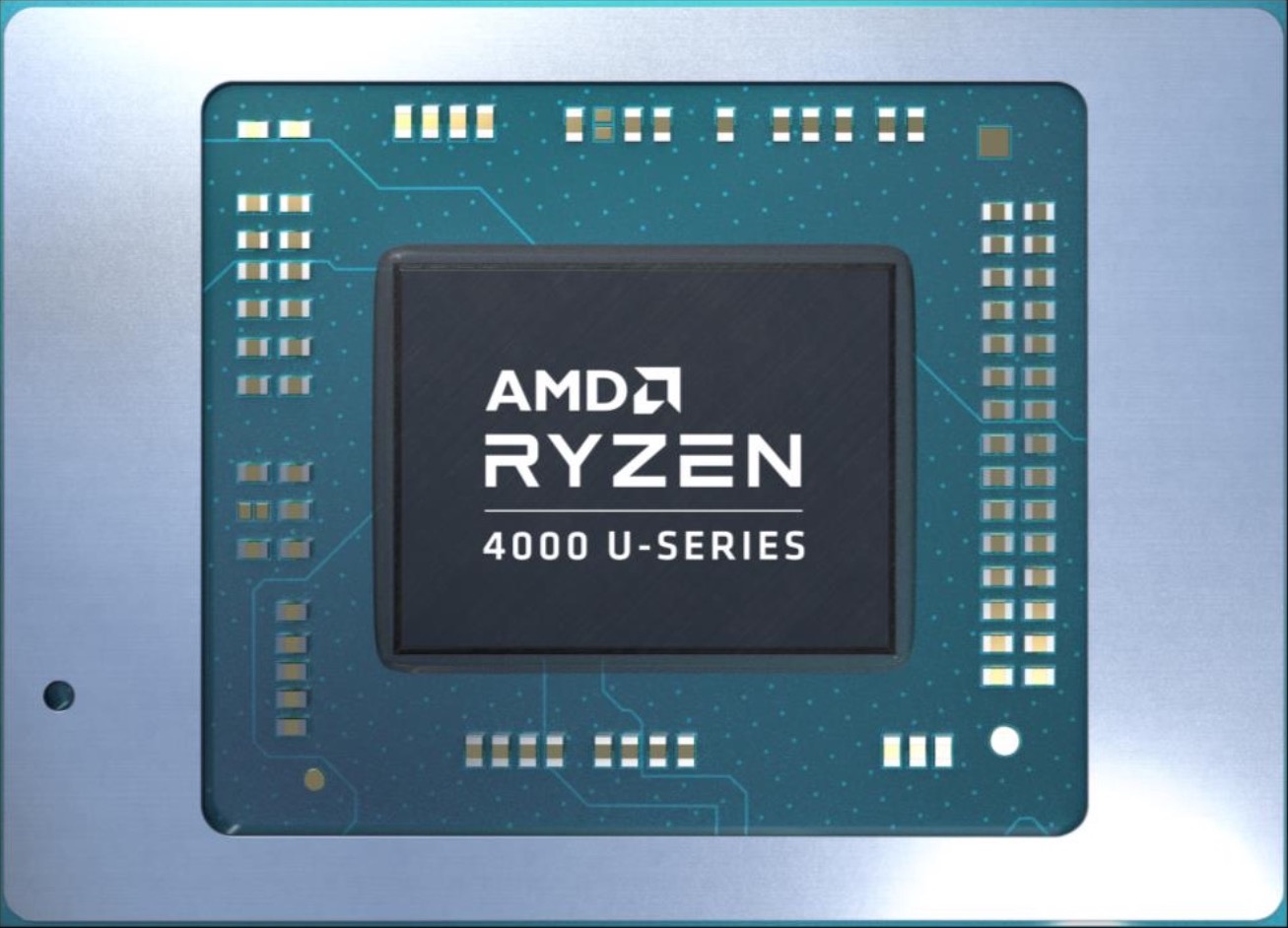
The AMD Ryzen 7 4700U is a processor for thin and light laptops based on the Renoir architecture. The 4700U integrates all eight cores based on the Zen 2 microarchitecture. They are clocked at 2 (guaranteed base clock) to 4.1 GHz (Turbo). There is no support for the thread-doubling SMT tech. The chip is manufactured on the modern 7 nm TSMC process and partly thanks to it AMD advertises a 2x improved performance per Watt for the Renoir chips. Compared to the faster R7 4800U, the 4700U offers slightly lower clock speeds and no support for SMT / Hyperthreading.
In addition to the eight CPU cores, the APU also integrates a Radeon RX Vega 7 integrated graphics card with 7 CUs and up to 1600 MHz. The dual channel memory controller supports DDR4-3200 and energy efficient LPDDR4-4266 RAM. Furthermore, 8 MB level 3 cache can be found on the chip. See our hub page on the Renoir Processors for more information.
Performance
The average 4700U in our database proves to be a rather competent little processor. It trades blows with the much more power-hungry Intel Core i7-10750H, as far as multi-thread benchmark scores are concerned. While it fails to get far enough away from the more affordable Ryzen 5 4600U, this Ryzen 7 is still a good CPU for most tasks.
Your mileage may vary depending on how competent the cooling solution of your laptop is and how high the CPU power limits are.
Power consumption
The Ryzen 7 4700U is a 15 W chip. However, laptop makers are allowed to change that value to anything between 10 W and 25 W, with clock speeds and long-term performance changing accordingly as a result. By going for the lowest value, it is possible to build a passively cooled system around the APU.
The fairly modern 7 nm TSMC process this Ryzen is manufactured on makes for above average, as of mid 2022, energy efficiency.
- Range of benchmark values for this graphics card - Average benchmark values for this graphics card * Smaller numbers mean a higher performance 1 This benchmark is not used for the average calculation
v1.35
log 13. 05:51:19
#0 ran 0s before starting gpusingle class +0s ... 0s
#1 checking url part for id 11291 +0s ... 0s
#2 checking url part for id 11683 +0s ... 0s
#3 redirected to Ajax server, took 1765601479s time from redirect:0 +0s ... 0s
#4 did not recreate cache, as it is less than 5 days old! Created at Sat, 13 Dec 2025 05:18:51 +0100 +0s ... 0s
#5 composed specs +0.006s ... 0.006s
#6 did output specs +0s ... 0.006s
#7 getting avg benchmarks for device 11291 +0.001s ... 0.006s
#8 got single benchmarks 11291 +0.005s ... 0.011s
#9 getting avg benchmarks for device 11683 +0.002s ... 0.013s
#10 got single benchmarks 11683 +0.003s ... 0.016s
#11 got avg benchmarks for devices +0s ... 0.016s
#12 min, max, avg, median took s +0.033s ... 0.049s









 - Average benchmark values for this graphics card


